

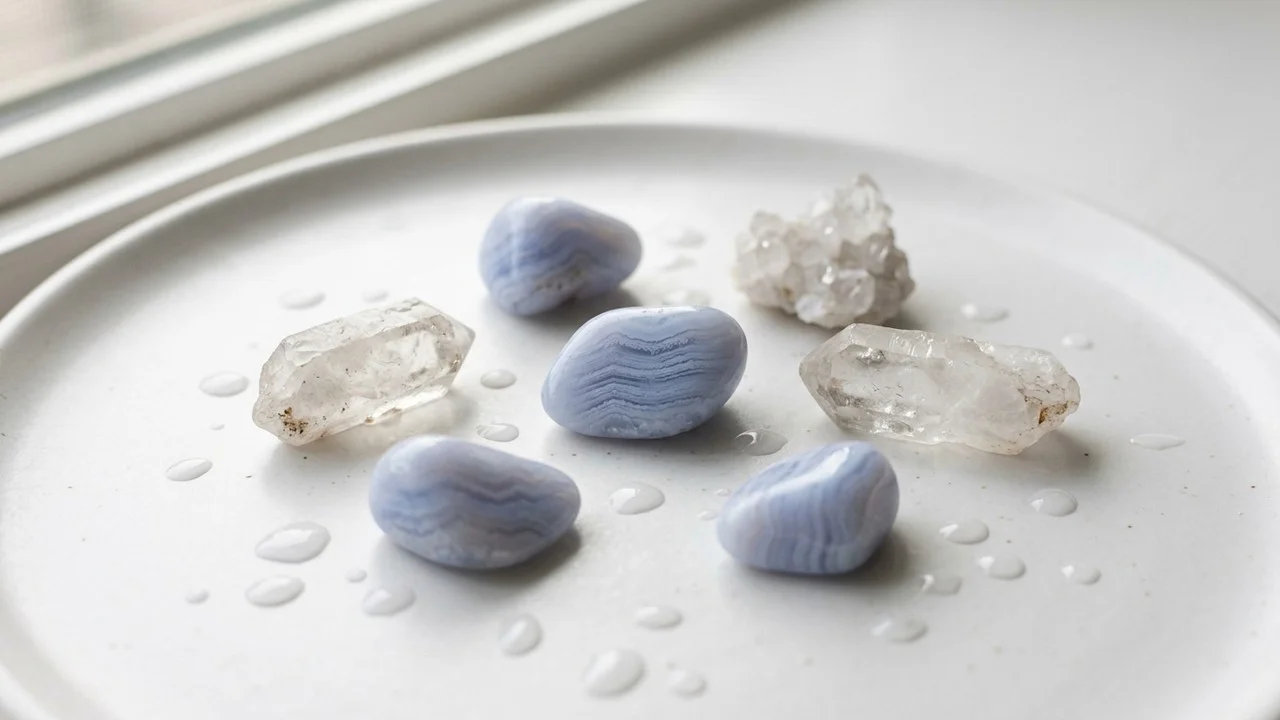
Water is one of the most intuitive, refreshing elements in crystal work. Many practitioners instinctively want to wash their newly acquired specimens under a stream or create soothing crystal elixirs. However, running water or soaking can permanently damage, dissolve, or alter certain minerals—and in some cases, release hazardous compounds into the water.
Understanding water safety is the single most important physical care guideline for crystal collectors. Here is your definitive guide to identifying water-safe versus water-sensitive stones.
The Golden Rule: Mohs Hardness & Chemical Composition
As a general mineralogical baseline, crystals with a Mohs hardness rating under 5 or 6 are typically porous, soft, and sensitive to moisture. Furthermore, minerals containing iron, copper, sulfur, or aluminum salts can oxidize, corrode, or leach when submerged.
🚫 Crystals That Should NEVER Go in Water
-
Selenite & Satin Spar (Mohs 2):
- Why: Selenite is a crystallized form of gypsum (hydrous calcium sulfate). Submerging it in water causes it to disintegrate, turn cloudy, lose its silky sheen, and eventually dissolve completely.
- Alternative Cleansing: Cleanse with smoke (cedar, sage, or palo santo), sound vibrations, or moonlight.
-
Pyrite & Marcasite ("Fool's Gold"):
- Why: Composed of iron disulfide ($FeS_2$), prolonged contact with moisture causes Pyrite to oxidize, rust, and produce sulfuric acid residue that degrades the specimen.
- Alternative Cleansing: Grounding in dry salt (separated by a cloth barrier) or using sound bowls.
-
Malachite (Mohs 3.5 - 4):
- Why: Malachite is a hydrous copper carbonate. When placed in water, especially acidic water, it can leach toxic copper. Never make direct elixirs with malachite and keep it dry.
- Alternative Cleansing: Moonlight, smudging, or resting on a large clear quartz cluster.
-
Calcite (Mohs 3):
- Why: Calcium carbonate is soft and acid-sensitive. Water can etch the polished surface, turning clear optical calcite dull and milky.
-
Halite (Rock Salt):
- Why: Halite is sodium chloride; it will literally dissolve into brine within minutes.
-
Angelite & Celestite:
- Why: Anhydrous calcium sulfate (Angelite) reverts to gypsum when submerged, softening and losing its sky-blue finish. Celestite will crumble or flake away.
-
Lapis Lazuli (Mohs 5 - 5.5):
- Why: Lapis is porous and frequently contains delicate calcite veins and pyrite flecks that will tarnish or absorb contaminants.
💧 Crystals That Are Water Safe
Crystals belonging to the Quartz family (Mohs 7) and hard silicate rocks generally handle running water and brief baths exceptionally well:
- Clear Quartz & Smoky Quartz: Robust and non-porous. Ideal for rinsing under lukewarm running water.
- Amethyst & Citrine: Natural quartz varieties that tolerate water well (just avoid high heat or thermal shock).
- Rose Quartz: Safe for gentle water cleansing and bathing.
- Agate & Chalcedony: Hard and durable microcrystalline quartz.
- Carnelian: Hard silicate; safe for brief water cleanses (avoid saltwater for extended periods).
- Black Obsidian & Smoky Obsidian: Volcanic natural glass; completely water-safe.
- Jasper Varieties (Red, Mookait, Ocean Jasper): Hard and water resilient.
Best Practices for Water Cleansing
- Quick Rinse vs. Soaking: Even for water-safe crystals, a 30-second rinse under natural flowing or tap water is usually sufficient. Avoid leaving stones soaking overnight.
- Beware of Saltwater: Salt adds abrasive, dehydrating, and corrosive stress. Many polished crystals will lose their luster or develop hairline fractures if soaked in saltwater.
- Thorough Drying: Always pat your crystals dry with a soft microfiber cloth immediately after rinsing to avoid mineral water spots.
Safe Alternative Cleansing Methods
If you are ever uncertain about a stone's chemical safety or Mohs hardness, err on the side of caution and choose waterless methods:
- Full Moonlight: Safe for 100% of all stones and specimens.
- Sound Cleansing: Tuning forks (4096 Hz crystal tuners), singing bowls, or bells provide pure vibrational reset with zero physical contact.
- Selenite Charging Plates: Place your delicate stones on top of a selenite slab or bowl for 4–6 hours.